How to Train a New Retail Employee (Not with a Binder)
Most shops train the register first because it has a manual, and let selling happen by watching. That order is backwards, and the fix starts with the new hire's first shift.
Walk into a new hire's first shift at most small shops and you'll find them on a stool by the register, watching someone else ring people up for four hours. Then, if there's time, someone reads them the return policy out loud. Selling gets skipped almost entirely. It isn't malice; it's sequencing. The register has a manual: keys, buttons, a drawer that opens the same way every time. Selling has no manual, so it gets deferred to "they'll pick it up watching the good ones."
If you actually want to know how to train a new retail employee, start by admitting that order is backwards, and for a specific, fixable reason: you're teaching the easy part first because it's easy to teach, not because it's what the job is.
The stakes are higher than one awkward shift. SHRM's onboarding guidance cites research showing nearly a third of new hires leave their job within the first six months, and that a structured onboarding makes them far more likely to still be there in three years. A bad first shift isn't just a wasted Tuesday — it's the opening chapter of why someone quits in week six.
Why "shadow Dana for a week" isn't training
A trainee with no task doesn't watch the right things. They watch you, because you're the only thing moving with intent, but they can't tell why you slowed at the door, why you asked that particular question, why you let the customer with headphones on walk past without a greeting.
Worse, you're not working normally — you're performing: over-narrating, nicer than usual, skipping the awkward return you'd normally push through fast. Four hours of that produces a trainee who's watched a highlight reel of a job that doesn't exist on a Tuesday when you're not there to star in it. Shadowing isn't training. It's seating.
How do you train a new retail employee?
Give a new retail employee one narrow job on the floor for their first shift, small enough to do well immediately, while a trained person runs the register. Teach the register itself in under an hour; it's mechanical. Drill refunds and price overrides separately, out loud, since they happen with a customer watching. Then watch their numbers against your store's baseline — not your best seller's — and judge the trend at three weeks, not the first week's total.
The one-job first shift
Pick one narrow lane and make it entirely theirs for the whole shift. At a bike shop that's the $8–25 rack by the register — bells, mirrors, tubes — with one instruction: ask everyone buying a bike, "Want a bell or a mirror added to that?" Nothing else. At a gift shop it might be the card wall: know where the birthday section is, know which three cards move fastest, and ask everyone who picks one up whether they need a bag. The job has to be small enough that they're visibly good at it inside the first hour, because competence at one thing beats a foggy overview of five.
What they should actually say to a browsing customer is a longer conversation for a later shift. We've written about the timing of that second approach separately, and it's worth reading before week two: how to approach customers in retail. Day one isn't the day for open-ended conversation. It's the day for one repeatable move, done correctly, in front of a customer, with a result they can see: a yes, a sale, a bag handed over. Meanwhile the register is fully staffed by someone who already knows it, so nothing is understaffed while the new hire learns one thing well.
The two register moments that need real drilling
The register itself is mechanical: ring an item, apply a coupon, open a house account, count a drawer at close. That's forty-five minutes with a couple of practice transactions, not a shift. Most shops over-invest here precisely because it's the easy part to teach — there's a button for everything — and that ease is exactly why it swallows the whole first day. It shouldn't.
The shortages that show up later are rarely about a new hire fumbling the keys anyway; they're almost never theft at all, which is its own read: cash drawer shortages, explained. Save the real training hours for the two moments that go wrong in front of people.
Refunds and price overrides are where a new hire either loses money or freezes, because both happen with a customer watching and both require judgment the manual doesn't cover. Returns aren't rare: the National Retail Federation put returns at 15.8% of 2025 retail sales — roughly one sale in six across all of retail, lower in-store than online, but nowhere near an edge case.
Role-play both before they happen live. Hand a new hire a real item, have a coworker play a customer wanting a refund with no receipt, and make them say the actual words and press the actual keys — three times through, out loud, before they do it for real. Do the same for a price override: a coworker asking for 20% off a clearance item, or a price that scanned wrong.
If your point-of-sale lets you separate who can ring a sale from who can approve a refund or override, use that split. A brand-new hire shouldn't be holding refund authority on their first Saturday.
What to say when they don't know the answer
Nobody trains this, and it's the moment a new hire's confidence actually breaks. Give them the words directly: "That's a good question — let me grab someone who'll know for sure, one second," then have them physically bring the answer back instead of disappearing into the stockroom to stall. For price or policy questions, make the rule absolute: never guess. A wrong guess costs more trust than "I don't know, but I'll find out" ever will. Practice the line out loud like the refund script — stiff the first three times, natural by the tenth.
How to tell by week three if it worked
Compare a new hire's numbers to your own store's baseline, not your best performer's — the same metrics that should already be driving how you pay people, laid out separately here: stop paying commission for Saturday. A new hire's conversion rate will lag for weeks; that's normal, not something to panic over.
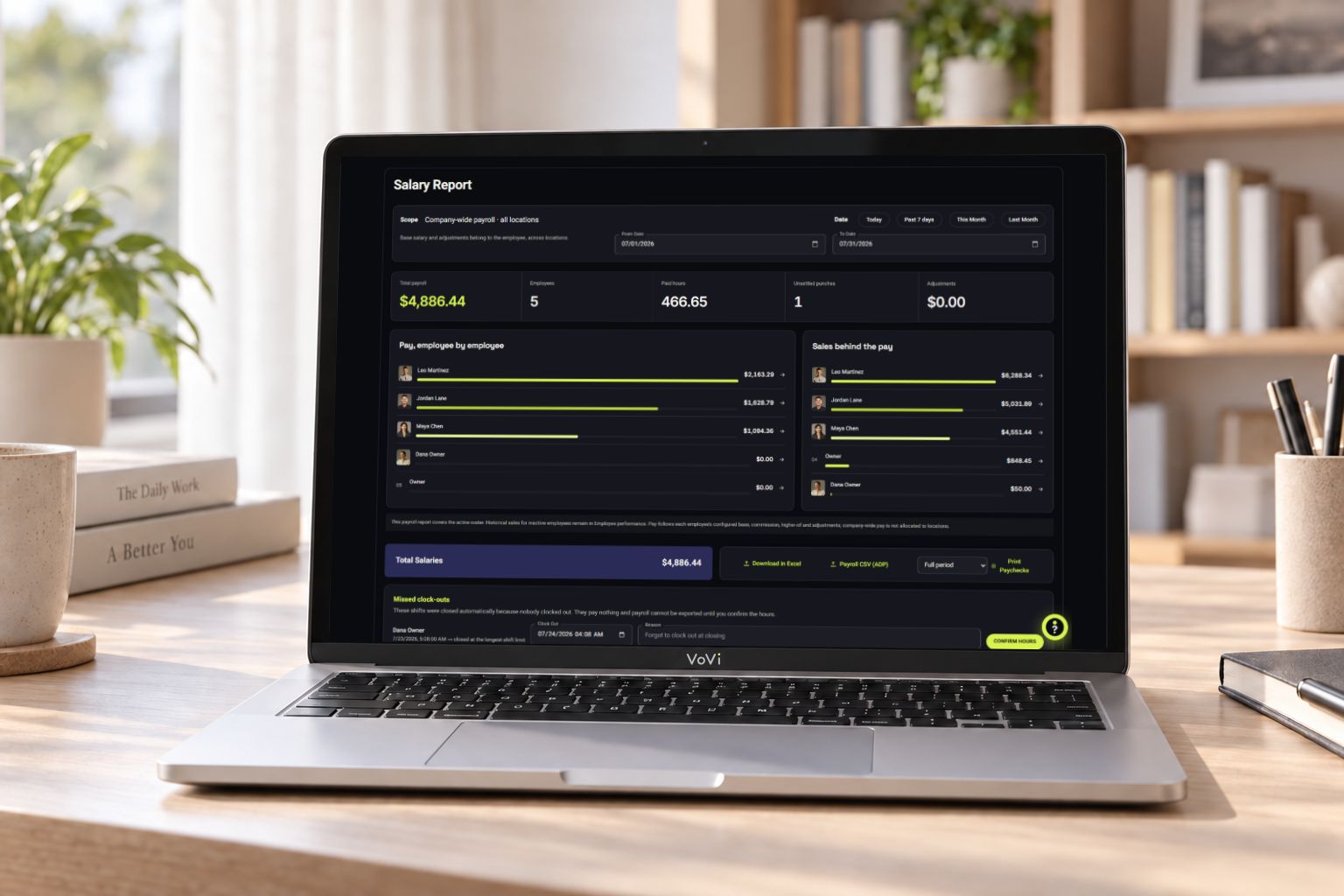
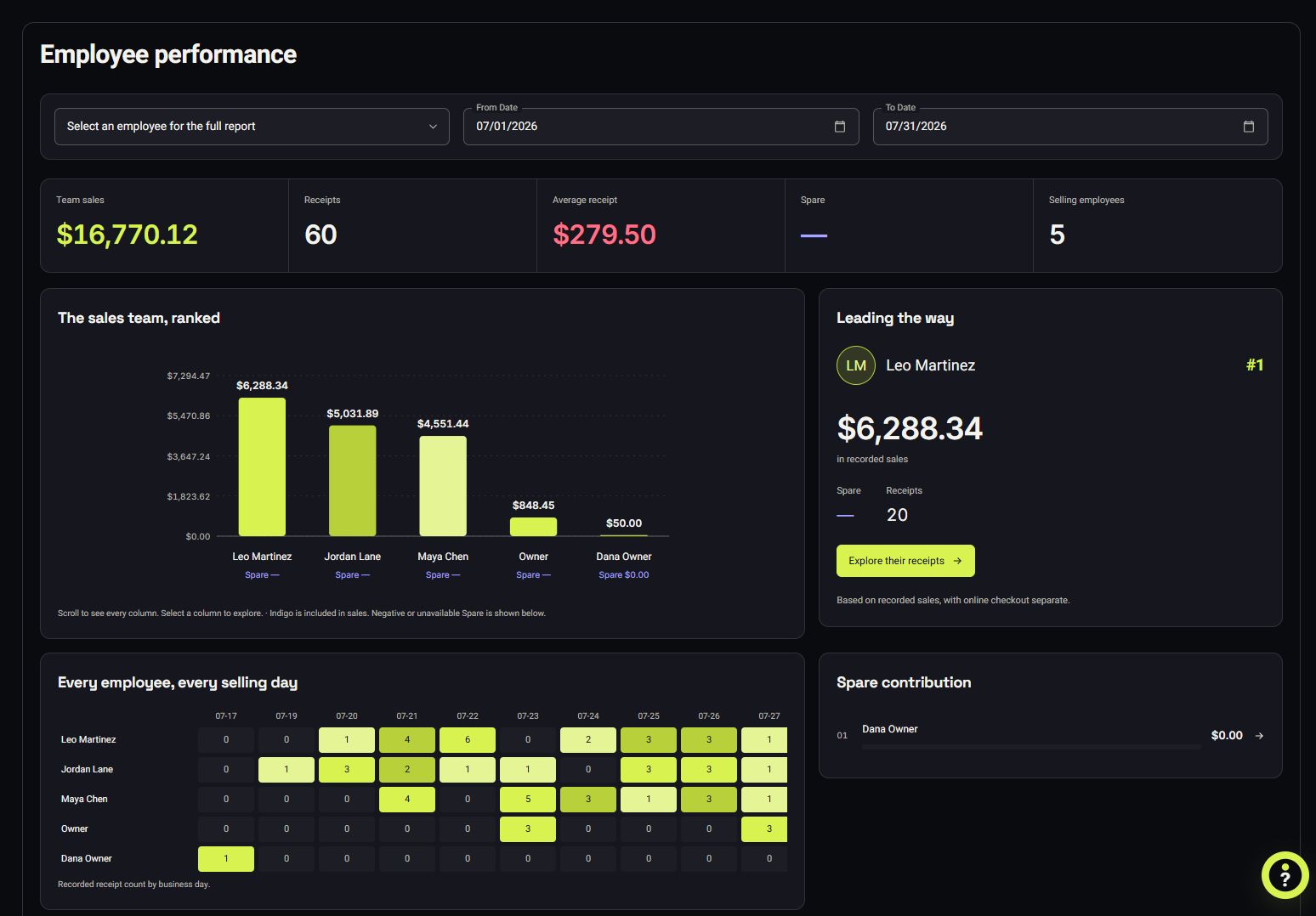
What you're actually watching is direction across three weeks: is their number climbing toward the store average, or flat? Flat after three weeks means the training didn't take, not that the person can't sell. If your point-of-sale breaks sales out by seller — in VoVi that's on the dashboard by default — you can read the direction off a screen instead of reconstructing it from paper receipts.
What not to do
- Don't hand over a policy binder on day one; teach the return policy when an actual return happens.
- Don't schedule the first shift as a close — that's a competence test on the day they have the least of it.
- Don't let training mean a screen all day. A video can teach a policy, not a floor.
None of this is about making training longer. It's about making it honest. Expect day one to feel wrong: one person parked on the bell-and-mirror rack while everyone else works the floor looks, from the outside, like you've undertrained somebody. Sit with that discomfort instead of fixing it by widening their job on day two. Selling doesn't come with buttons, which is exactly why it belongs in the first shift, not the last.
Takeaways
- Give a new hire one narrow floor task their first shift and let a trained person run the register.
- Register mechanics take under an hour to teach; refunds and price overrides need real, out-loud drilling before they happen live.
- Script the exact words for "I don't know" so a new hire never has to guess in front of a customer.
- Watch direction over three weeks against your own baseline, not your best seller's; flat after three weeks is the signal to worry about.
- Skip the policy binder and the closing shift on day one; both test competence the new hire hasn't built yet.
Common questions
How long should retail employee training take?
Longer than a single shift. Keep the new hire on their one narrow job for two or three shifts in a row before adding a second task; widening too soon is why the one-job method fails in practice. Full register and floor responsibility can follow after that, with the three-week mark being when you judge whether the training actually took.
Should a new hire work the register on the first day?
Not alone, and not as their only job. Let them ring a few sales with a trained person a step away if traffic allows it, but the register isn't what makes or costs you a sale. Running it slowly for a day rarely loses a customer; a fumbled first approach on the floor can.
How do you train a seasonal hire you'll only have for six weeks?
Skip straight to the one-job floor assignment and the two register drills; there's no time to build broader product knowledge, so don't try. Pick the task with the most sales per minute of training, such as an add-on rack or a gift-wrap station, and let a seasoned staffer absorb everything else until the six weeks are up.