How to Reduce Employee Turnover in Retail: Fix the Schedule
Owners raise wages to stop the exodus and watch good people leave anyway. The bigger lever is predictable hours — a rest window, real notice, and days off that stick.
Jamal asked for two dollars more an hour in February. You split the difference, gave him one, and felt good about it. He quit over the schedule in May anyway. He'd found out about a closing shift the night before it started, again, and it was the second time that month he'd missed picking up his kid because the store needed him back twelve hours later.
If you want to reduce employee turnover in retail, the schedule is where to start — not the paycheck. Ask a departing employee why they're leaving and you'll hear "better opportunity" or "moving on." Ask when they decided, and it usually traces back to a week where the schedule went sideways: a clopening, a shift added Tuesday for Wednesday, a day-off request that got overridden without a conversation.
Does a pay raise reduce retail turnover?
Not on its own. Shift Project research on schedule instability, tracking hourly retail and food-service workers, found six-month turnover at 24% among employees given at least two weeks' schedule notice, versus 39% among those given less than 72 hours and 42% among those who'd had a shift cancelled outright. Wage increases help most near the bottom of the pay scale. Above that floor, an unpredictable schedule pushes people out faster than a flat raise keeps them in.
What schedule instability costs you
Retail's quit rate, per BLS quits data for retail trade, ran at 3.1% in July 2026 — call it one in roughly every 32 employees walking in any given month. In a ten-person store, that's someone new to train more often than you'd like to admit.
Replacing them isn't free even when you don't count the hours you cover yourself. Turnover-cost research from the Center for American Progress puts the typical price of replacing a worker earning $30,000 or less a year at about 16% of that salary — call it roughly $4,800 in recruiting, onboarding and the weeks a new hire is slower at the register than the person they replaced. None of that shows up as a line item labeled "turnover." It shows up as overtime, as a manager running register instead of placing an order, as the next person watching how the last one got treated and adjusting their own plans accordingly.
How to reduce employee turnover in retail without raising pay
This costs no wages, only discipline in how you build the calendar.
Put a floor under the rest window
A clopening — closing at 10 or 11pm and opening again at 6 or 7am — is legal in most of the country and common in more places than that. New York City's fair workweek rules require at least 11 hours between a closing shift and the next opening shift for covered fast-food employers, with a $100 premium if the worker agrees to less. You don't need the ordinance to borrow the number. Pick a rest floor — 10 hours is a reasonable start for a small shop — and build the schedule around it before you build it around coverage. If closing someone out at 11 means they can't open before 9, don't schedule them for 7.
Post the schedule far enough out that plans can be made around it
Two-thirds of hourly retail and food-service workers get less than two weeks' notice of their schedule, and half of those get less than a week. That's the bar you're competing against, both for hiring and for keeping the people you already trained. Posting ten days out, on the same day every week, and holding it the way you'd hold a delivery date with a supplier, already puts you ahead of most of the market. It helps even more if you build the schedule off your actual demand curve instead of last week's headcount. Ten days out is enough for someone to say yes to a lease, a class, a second job, or a doctor's appointment.
Protect an approved day off
An approved day-off request that gets scheduled over anyway teaches an employee that asking properly is pointless, and that next time they should just call in instead. Protect an approved request the way you'd protect a customer's appointment: if something forces you to break it, you call to explain before they find out from the posted schedule.
Cross-train enough people that one callout doesn't become someone else's clopening
A callout turns into a clopening when only one or two people can run a close, so the fix defaults to whoever else knows how. Write down, per employee, which shifts they can run alone — open, close, register, receiving — and look for the gaps. Training someone to run a close without a binder takes longer than posting a schedule change, so start before you're down to the one person who can do it. If losing any single person means you can't cover a close without asking someone to work a double, that's a training gap before it's a scheduling problem.
See the pattern before you fix it
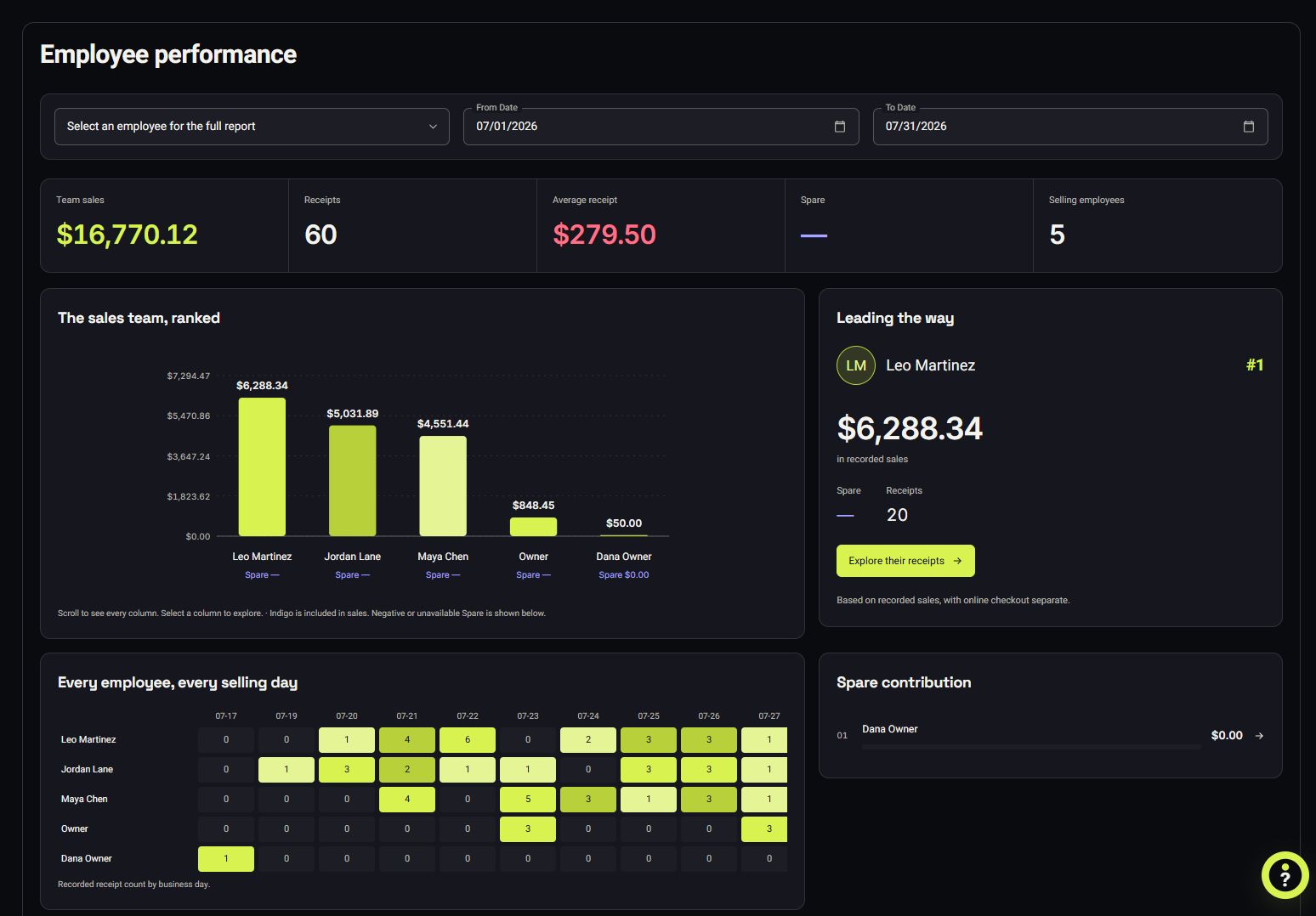
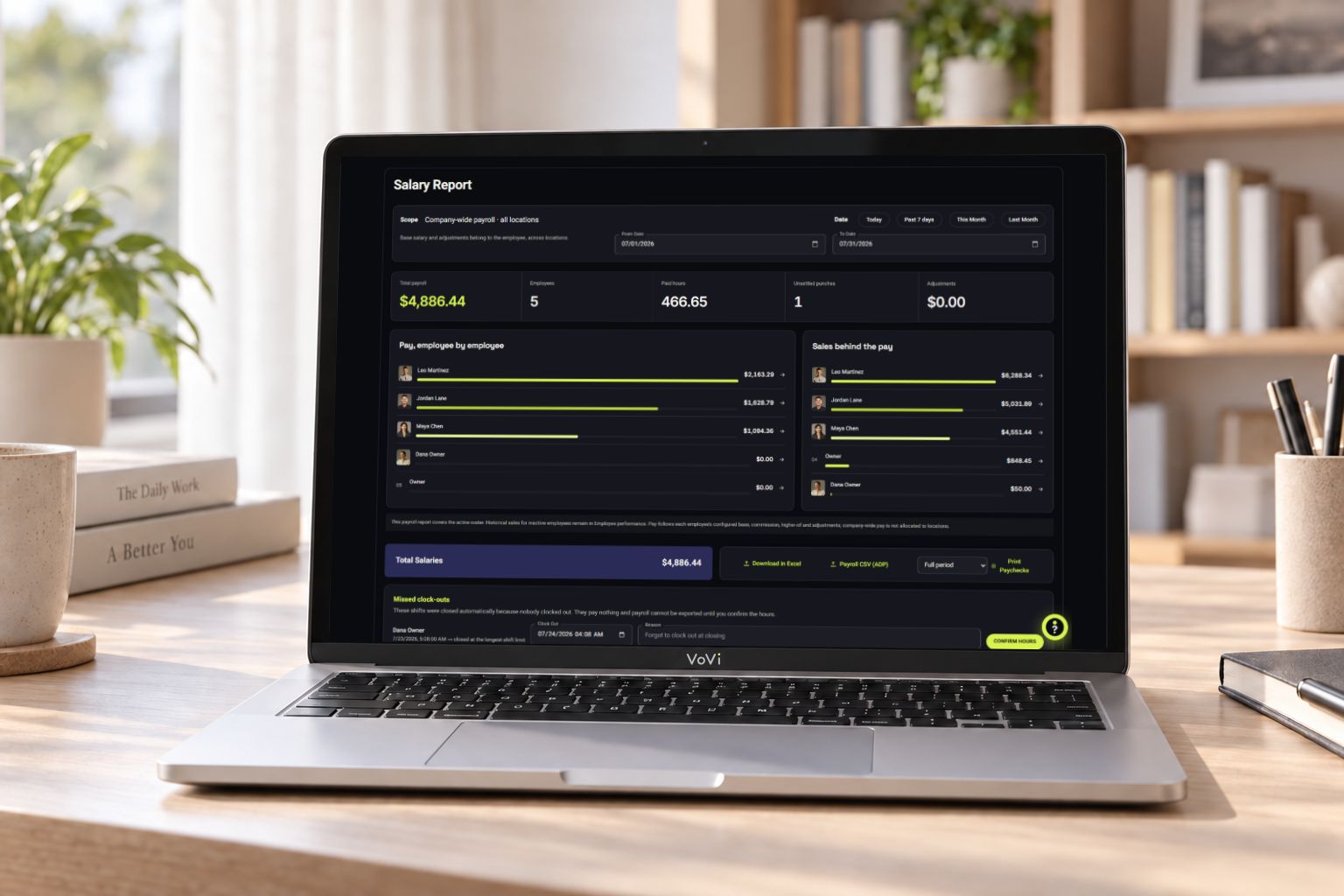
If your point-of-sale system logs clock in and clock out by employee — VoVi does this on every plan, with no contract or cancellation fee — pull the last month of timestamps and look for the same person closing and opening within eleven or twelve hours more than once. That pattern is usually invisible to whoever built the schedule three weeks ago and very visible to the person living it.
Takeaways
- A raise fixes the reason people give in an exit interview. It rarely fixes the reason they started looking three weeks earlier.
- Set a rest floor between a close and the next open — 10 to 11 hours — and build the schedule around it before you build it around coverage.
- Post the schedule on the same day every week, at least ten days out, and hold it like a delivery date.
- An approved day off is a commitment. Overriding it costs more trust than the shift is worth.
- Cross-train until losing any one person doesn't force a clopening onto someone else.
Common questions
What do I tell staff when I change the schedule I just posted?
Three things, in order: what changed, why it changed, and what you're doing to make it right. Making it right can be a shift swap, a small bonus, or first pick on the next schedule. Skip the why and it reads as arbitrary even when it isn't. A text that says "shift moved, need you at 2pm instead of 5pm, picking your Saturday off next week to make up for it" takes thirty seconds and buys more goodwill than an apology after the fact.
Is scheduling a clopening illegal?
In most of the country, no. Outside roughly a dozen cities and Oregon's predictive scheduling law — which requires a 10-hour rest period between shifts for retail, hospitality and food-service employers with 500 or more employees worldwide, plus 14 days' written notice — there's no legal minimum rest between a closing shift and the next opening shift. New York City requires 11 hours for covered fast-food employers, with a premium if the worker agrees to less. Nothing stops a shop anywhere else from setting the same floor voluntarily.
What if my store is too small to avoid clopenings entirely?
A three-person shop can't always dodge a clopening the week someone's sick. Aim to make it rare, temporary and acknowledged — the exception you rotate and say thanks for, not the default fix for every callout. Three clopenings in one month is a staffing problem you need to solve by hiring or cutting hours elsewhere.